
Growing up, my brother had a habit that infuriated my mother and me. Every time one of us asked him a question, he would give us this unique answer:
Ça dépend.
He was not stalling. He was not flinching. I know that now. He is an electrical engineer who spent years planning telephone networks, then moved into venture capital investing. In both fields the honest answer is the same: it depends on conditions not yet evaluated.
Back then, it looked like paralysis. He couldn’t throw me an answer.
I pictured his boss in the early years, wanting to throw something across the room. Just give us the fucking answer. Tell us where to put that damn tower. Tell us which company gets the axe. Make up your mind. And my mom thought I had no imagination. I didn’t, but I watched a lot of TV.
But my brother was not equivocating. He was protecting the question. Why? He’s stubborn, I think.
There was a major power outage in northwestern New Brunswick. A man in my community posted on Facebook: Ok le manque d’électricité, y vont tu déduire ça de notre prochaine facture?
Was he asking for credit? Did he forget to use the sarcasm font? Let’s treat it as a joke. Or not... why do we feel the urge to resolve everything? I smiled and moved on.
As a teenager, I was under the impression that I knew most of the answers, only to realize I was choosing the questions.
We ask a lot of questions. We rarely stop to ask if we are even asking the right thing. We assume we know enough to know what to ask. We do not.
Asking your doctor “will I die?” is not the same as asking about the probability of dying from a specific cause. Same person. Same room. Different conversation. The actual answer the doctor will think: yes, you will... eventually.
Reminds me of a meme. Everybody’s asking how’s the beer. Nobody’s asking how’s the brewer.
We do not fail to find answers. We often select the questions that have answers available and call that knowledge.
You ask a question and you want a clean answer. Think of a prism. Dark Side of the Moon style. You send the light. They hold the prism.
The prism does not explain what the light is. It reveals what it contains. What comes out is not an answer. It is the conditions the answer depends on.
But the light has to hit the right angle. Otherwise, nothing separates.
Silence, instead of an answer, is hiding the prism. The light is avoided.
Evasion, even langue de bois, is the prism with a filter. The conditions come out. The ones they chose for you, without your permission.
“I don’t know” is closer. At least the light is moving. But is it ignorance or apathy? One cannot find the proper angle. The other already left the room.
Ça dépend is not a bug. You asked for an answer. What came out is what the question actually contained. The conditions. The path to an answer, or another question.
Sometimes they hold it correctly and the light separates cleanly. You read, you move on.
My brother would not leave the question. That is what infuriated everyone. He held his ground until the conditions were legible.
He still built the networks. He still made the investments. Ça dépend did not stop him from pulling the trigger. It stopped him from pulling it before the path was legible.
The person who demands an answer before the situation is ready is not more efficient. They are rushing the process. Ça dépend does not delay the decision. It refuses the illusion that the decision is obvious. Meanwhile, the one who waited knows the ground.
The decisions are quick. The process behind them is diligent.
I recently took a week off and decided I would read three books. I started with the smallest one. Camus. Le Mythe de Sisyphe.
What a load to bear.
I carried that book everywhere I went that week. Read half a page. Put it down. Found something else to do. Picked it up again. It travelled with me like an unfinished obligation. I finally finished it on the flight home.
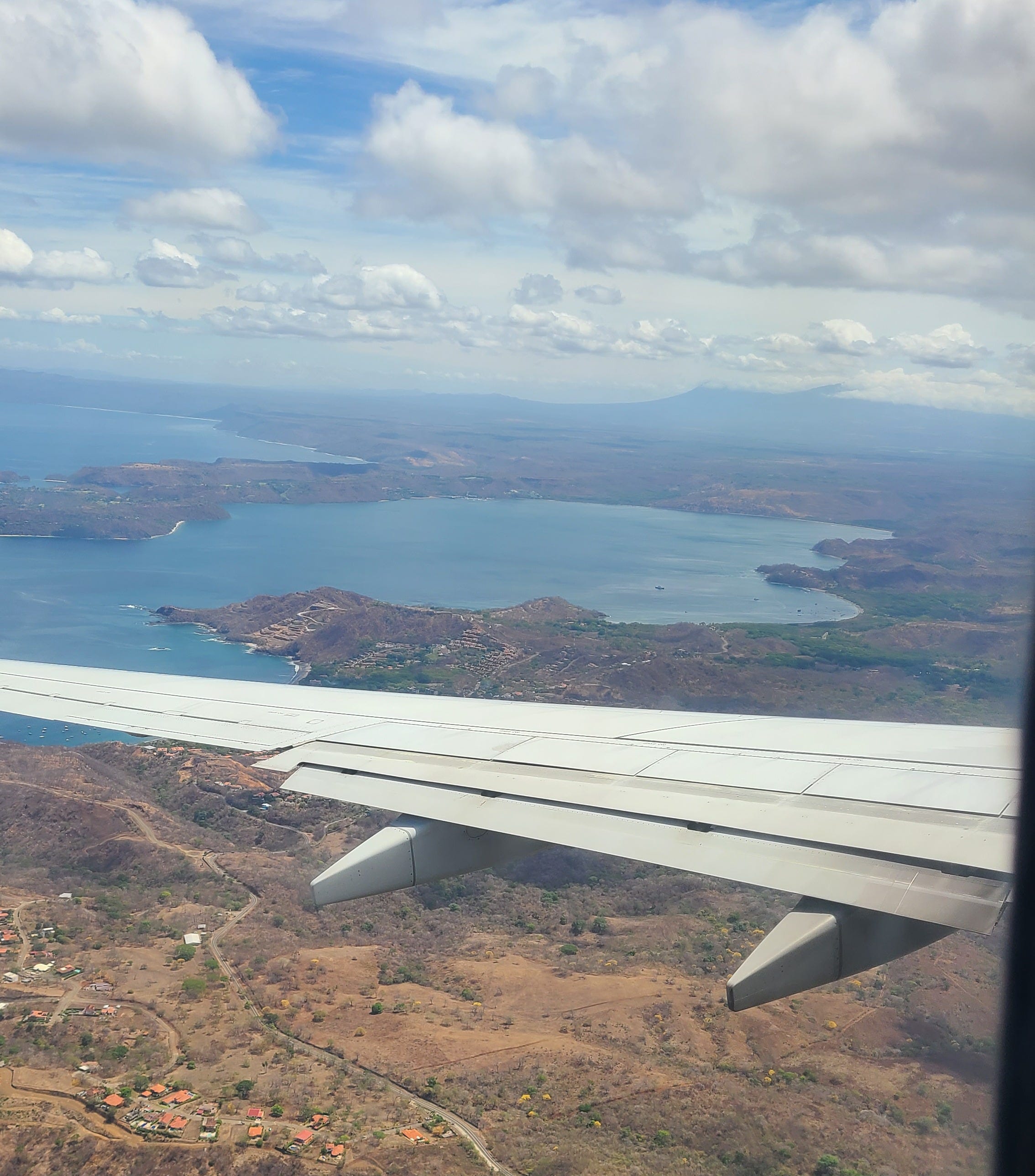
I was happy just looking at the finished book. Proud of the achievement. The boulder at the top. I closed the book and looked at the clouds through the oval window.
Then I remembered I had two more books to read. I smiled.
That is Camus. You do not arrive. You turn around. Sisyphus must be imagined happy. I understood that for the first time at thirty thousand feet, holding a finished book, already knowing the next one was waiting.
My brother figured that out at the dinner table. Camus needed about 150 pages to convince me.
I have been asking why since I was five years old. My cousins gave me a nickname that summer. Pourquoi. It was not a compliment.
Four decades later I am still asking. The asking did not produce answers. It produced better questions.
Don’t expect an answer. If you do, I’ll know you didn’t read Camus.
When we resolve x, and y, and z. We will reach supreme knowledge.
And then what?
The « pourquoi » phase is a milestone signaling cognitive growth in cause-and-effect understanding.
There’s a Buddhist saying that goes like this :
For the child, a mountain is a mountain. For the adult, a mountain is not a mountain. For the wise, a mountain is a mountain.
To a child, a mountain is a mountain.”: This is the stage of innocence. The child perceives the world directly, without prejudice, without intellectualizing. Reality is what it is.
“To the adult, a mountain is not a mountain.”: This is the stage of analysis and doubt. The adult intellectualizes, deconstructs, sees the mountain as an assembly of rocks and earth, an obstacle to climb, or a shape in the landscape. They no longer see the mountain, but their own thoughts and theories about it.
“To the wise, a mountain is a mountain.”: This is the stage of wisdom or awakening. The wise person has moved beyond intellectual analysis. They perceive the mountain in its wholeness, without getting lost in technical details or mental projections. They accept reality as it presents itself, with a free spirit, in harmony with it.
😉
J’ai fait ma synthèse de bacc sur Voltaire & Camus. Ça changer ma façon de voir la vie !