I was texting with my cousin.
We have an ongoing discussion on supplements and growing older. He is a fiscalist. I run a brewery. Every spring, I distract him a little, out of empathy. I see tax season as the equivalent of hell incarnate for my accountant friends. They do not see it that way. Fair enough.
Whenever he thinks I am getting too confident on a subject, he has a line for me: “your CV reads finance and beer.” Recently he added another: “I stay in my lane.”
Obviously, I am more discerning. But he is not here to defend himself.
He is not wrong that expertise matters. It does. But what is expertise, exactly? Is it the credential, the department, the title, the stamp? Or is it the refusal to stop looking once the room has moved on? Every field has a gate. The people inside it, the gatekeepers, decide what counts as signal and what counts as noise.
That is why John Ott caught my attention.
Ott was a banker in Chicago who spent his free time doing time-lapse photography. He made his first film in 1927, still in high school. His hobby became a career after twenty years in banking.
His subjects were flowers. To film them properly, he built elaborate studios in the form of greenhouses, because a plant is not a prop. It has its own timing, its own rhythms, its own environmental demands. Keeping the lighting consistent from frame to frame while keeping the plant alive was an engineering problem in its own right.
Disney noticed. They hired him to shoot footage for their nature documentary Secrets of Life. They wanted a stem to pumpkin sequence.
In the studio, the vine would grow. It would flower. But the female flowers turned brown and dropped off. The male flowers developed vigorously.
The next year, the original fluorescent tubes had burned out. The hardware store was out of the same ones, so he grabbed daylight-white fluorescents instead. Then the pattern flipped. The male flowers dropped off and the female flowers developed vigorously. A pumpkin needs both to pollinate. No pollination, no pumpkin. He found pollen from another source. He finally grew his pumpkin.
But he kept wondering what had happened. He went back to the greenhouse and tested. He confirmed his thesis: switch the tubes, switch the outcome. Every time. The plant needed what artificial light could not give it: the full spectrum it would get from the sun.
The scientists who reviewed his work moved on. Most people who run experiments outside their field produce noise, and the gate cannot tell the difference in advance. It filters correctly most of the time, I assume. The cost is that it filters at the same rate regardless of what is coming through.
Ott kept going. He did bona fide botanical and biological experiments. He coined a term for what he thought was happening to people living under artificial light: mal-illumination. The light equivalent of malnutrition. Loyola University gave him an honorary doctorate in 1958. The credential arrived after the achievement, not before or during it.
What Ott observed was never controversial when it came to plants. A serious grower knows that a tropical plant moved north does not just require water and warmth. It needs the right spectrum, the right length of exposure. Ask your florist.
No one finds that mystical. No one calls it fringe.
People will worry about their orchid’s light and never once think about their own lighting environment. Plants have mitochondria. So do you. Photosynthesis runs on visible light. Mitochondria contain enzymes that absorb red and infrared light. Different parts of the spectrum. The unfiltered sun provides all of it.
The ancients did not need a microscope to notice something was there. Three thousand years before anyone had a word for spectrum, the Greeks were filtering sunlight through coloured cloth in healing temples. Ailing people were brought there. They called the city Heliopolis. City of the sun. They did not know why people recovered from their ailment. They knew that they did.
Nobody had to refute sun therapy. Something more convenient arrived. The question was not asked.
But not everyone forgot.
In 1903, Niels Finsen won the Nobel Prize in Medicine for treating disease with light. He was sick himself. Weak, anaemic, living in a north-facing house in Copenhagen. He noticed that time in the sun made him feel stronger. That was the observation. Everything else followed from it.
That same year, Auguste Rollier opened a heliotherapy clinic in Leysin, in the Swiss Alps. He was treating tuberculosis, primarily of the bone. Eventually he ran thirty-six clinics. Over a thousand beds. His recovery rates were remarkable enough that the clinics kept expanding.
Then antibiotics arrived and cured tuberculosis, the same disease Rollier had been treating with mountain light for twenty years. The sanitariums closed. Nobody asked whether the light was doing something the drug was not. I guess the pill was easier to swallow.
Allow me to go out of my lane for a moment. There is an enzyme in your mitochondria called cytochrome c oxidase. It sits at the end of the energy chain that keeps your cells running. Scientists first noticed it in 1884 because they could see it absorbing light at specific wavelengths. They named it in 1925. The observation went into the literature and stayed there. What it might mean for cells living under artificial light was not a question anyone thought to ask. Nature does not build light-absorbing molecules for nothing, I assume. Nature is thrifty. A molecule that absorbs light at specific wavelengths is doing something with it.
In March 2026, Nature published an article on red-light therapy. The article found that cells exposed to red and near-infrared produce energy more efficiently. When cells are healthy, the difference is small. When cells are stressed, it matters.
The article does not mention it, but cytochrome c oxidase is known to absorb light in that range. What it does with it is still debated. The absorption is not. The study is precise about what it measured. One variable, in isolation. The body does not receive light that way in nature.
Take away something nobody was measuring, and you will not notice until you need it.
The sun provides these wavelengths for free. But we always substitute for efficiency purposes. Do we really?
“LEDs are efficient.” “They cut consumption.” “They last longer.” We are all familiar with the marketing pitch. Meanwhile, nobody counted the components, the circuits, the rare earth materials, the cost. But then again... efficient at what?
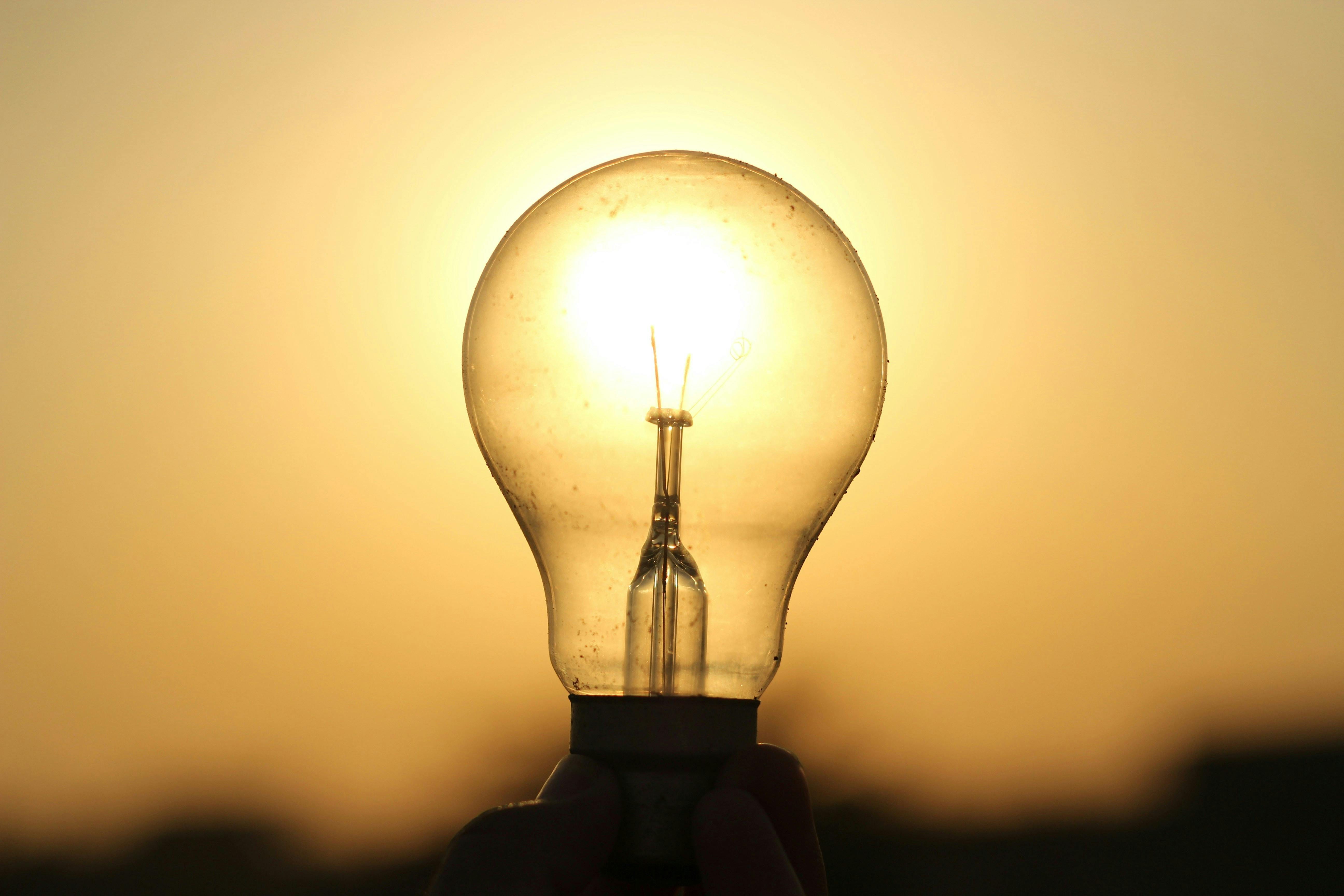
The old incandescent bulb produced a broad range of light, including red and infrared wavelengths. LEDs replaced them with a narrower spectrum, optimized for one thing: lumens per watt. Visible brightness per unit of energy. That is what efficient means. The wavelengths your cells respond to were not part of the equation.
Where I live, in northern New Brunswick, the incandescent bulb’s so-called waste heat was heating the living room I was sitting in. The bulb was doing several jobs. The energy savings were real. The other metrics were never in the room.
My cousin would say I have too much time on my hands.
He is not wrong about the gate. The world is full of people with theories and no signal. The scientists who ignored Ott were doing exactly what the gate is built to do.
Finsen still won the Nobel.
The gate was right to be skeptical. The gate was wrong about Ott. The gate has no way of knowing which situation it is in.
Neither do I.
Sometimes the banker notices one thing. Sometimes the brewery guy reads outside his lane. Sometimes the knowledge was sitting there in plain light.