
Before launching Les Brasseurs du Petit-Sault, I visited many craft breweries. As our business plan was being written, we needed to better understand the lay of the land. In New Brunswick in 2013, there were a handful of breweries. No handbook on how to deal with the provincial alcohol monopoly. It barely had one itself. We were about to learn how much of an anomaly we were.
One of the first stops was Picaroons in Fredericton. Sean Dunbar, the owner at the time, sat down and answered every question. Candid. To the point. No posturing. I was not the first person to show up unannounced and ask him how the business worked. I could tell.
At the end of the meeting, I asked if he was ok with me using any of what he had shared.
“Of course. This is all open source.”
It hit me in a way he probably did not intend. Some years back, I had spent a summer writing open source code for Google on the Open Syllabus project. I knew exactly what open source meant. The knowledge is available to anyone willing to show up. No gate. No licence. No proprietary filter. You take it, you build with it, you pass it on. For many, open source software meant something like free beer. For me, it meant something like free speech.
Linking open source software to craft beer made perfect sense to me. I have kept that approach with every brewer since.
A friend sent me a reel the other day. An English woman, probably in her seventies, was asked a simple question. If you were in your twenties again, what would you do?
Go to the pub.
Not travel. Not start a business. Not go back to school. The pub. She talked about her local spot in Durham. She went there many times a week. Parents, friends, strangers. Lawyers, doctors, teachers, lecturers. A total cross-section.
“We lived our lives in front of each other,” she said. “You went in, you were in a bad mood, or you had a row with your husband. You lived your life with that community.”
“Pubs are the last place where people can get together. Flaws and all.”
I received this reel at the exact moment I heard a bioethicist say on a podcast that the number one predictor of good health is socialization. Not exercise. Not diet. Not supplements. Being in a room with other people, talking.
The woman in Durham got it right without the study.
I have a strong suspicion that we will never have an app replicate what she described.
In 1992, a British anthropologist named Robin Dunbar proposed that the human brain has a limit on the number of stable relationships it can maintain. The number he suggested was roughly 150. The exact figure is debated. The constraint is not.
Below that ceiling, you know the people. You read the signals. Trust is built through repeated interaction. Social pressure is felt, not administered. You do not need a policy for cooperation. You need proximity.
The taproom replicates something older than any institution we have built. The regulars know each other. The staff knows the regulars. Reputation is tracked by showing up, not by profile. Nobody needs a rating system. The room reads you.
Sean Dunbar the brewer and Robin Dunbar the anthropologist share a name. One described the ceiling. The other built a business underneath it.
We used to have more of these rooms. Churches. Night clubs. Edmundston had plenty of both.
From my observation, the grocery store seems to be the new de facto meeting place. The aisle where you run into someone you have not seen in months. The checkout line where two neighbours catch up while the cashier waits. Nobody designed the grocery store as a gathering space. It became one because there is nowhere else left. Maybe there is a business plan behind this new social trend, but I digress.
Sean did not need the research. He opened a taproom in 2016. He said it plainly in an interview. “A quiet public place to talk about ideas is an amazing thing. Beer helps take you over that edge of, ‘Alright, this is going to sound crazy, and I normally would not tell you, but I have this idea...’ and if you talk to enough people and have that conversation, you run into enough people that go, ‘That’s not a crazy idea at all!’”
“That is how innovation happens, and community planning, and community thinking, and building businesses. That is why we do what we do. That is why we make beer.”
Not why we sell beer. Why we make it.
And yet, we tried to build this online. Social media was supposed to be the room at infinite scale. Everyone connected. No closing time. No geographical limit. No friction.
That was the problem. Social media removes the friction that makes the room work. I rarely see someone get infuriated in a taproom.
The awkward pause. The eye contact you cannot avoid. The fact that you cannot leave a conversation at a bar without the other person noticing. Online, you can exit without cost. You can perform without consequence. You can say things you would never say to someone sitting next to you.
The friction was not the obstacle. It was the mechanism.
A bioethicist will publish a finding. The finding will be reported. A programme will be designed. Funding will be allocated. The programme will measure engagement. A committee will evaluate outcomes. The measurement will become the objective. The objective will replace the thing.
And somewhere, a taproom will still be open. No programme. No mandate. No measurable outcome.
Just a seat, a pint, and the person next to you. Something that happened organically.
The headlines will tell you the pint is the problem.
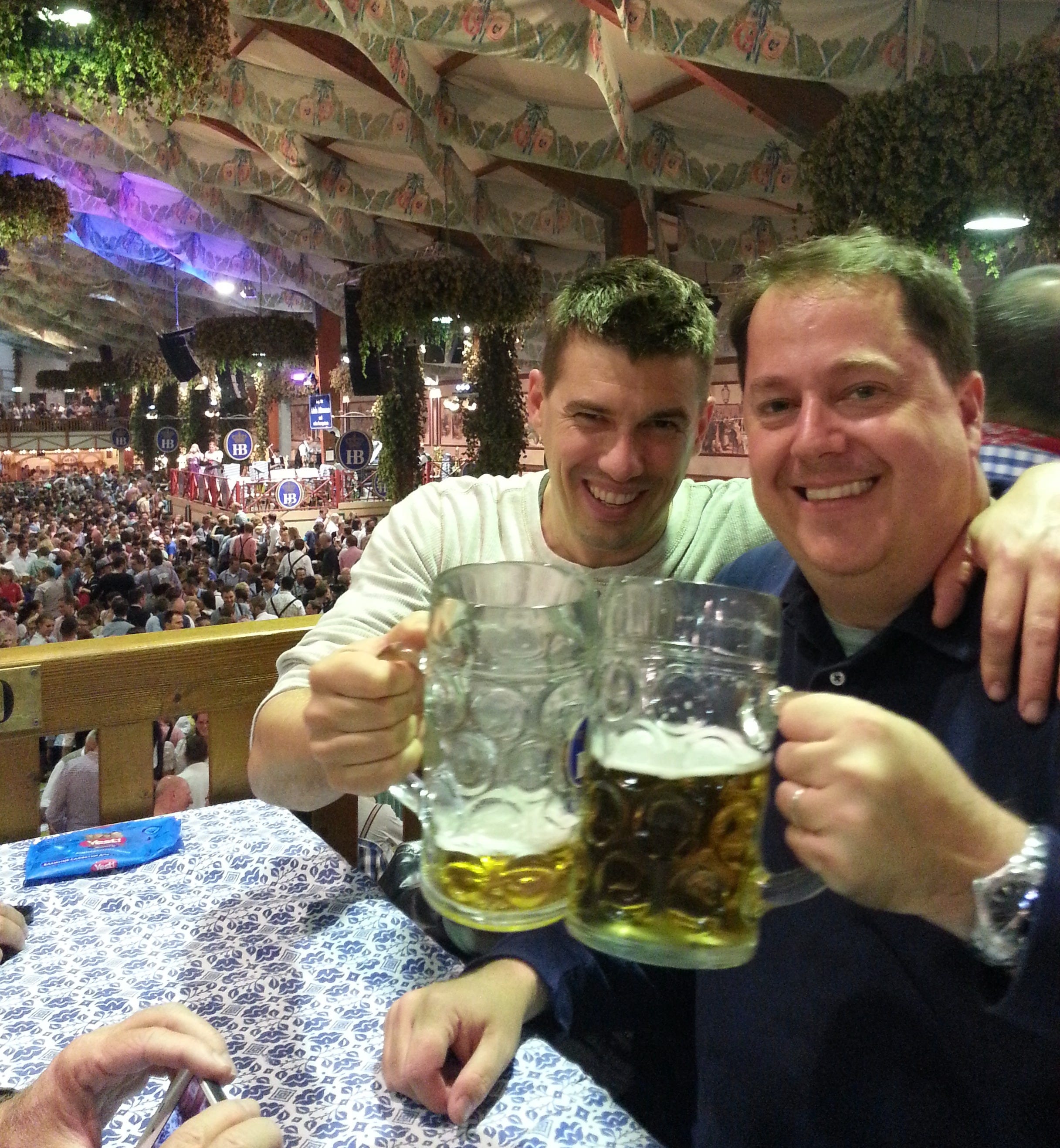
I say, chat freely. Drink responsibly.
As a Canadian going to Florida in the winter in a Park community, especially a resident-owner Park, with residents from different parts of the US, Canada and Europe, the socializatiion within the community, the friendships, the exchange of ideas… that is what it was all about… no one seemed to care what type of work you did before retirement!
A pint and a moan….