
I read this week about a cold water immersion retreat in the mountains of central Europe. I had never heard of it before. The scale of the operation was astounding, the testimonials striking. People arrive with chronic conditions and leave reporting dramatic improvement. The protocol is elaborate, extending past cold thermogenesis to clean eating, fresh air, daily walks, and rest.
It caught my attention because I do cold plunges too. It makes winter more tolerable.
The retreat’s founder has no medical credentials. He grew up on a farm and healed himself after cheating death in an accident the local doctor said was usually fatal. He offered the therapy to others, then proceeded to build a practice inspired by his protocol. The medical establishment dismissed him for years, but the clientele kept coming.
The business prospered. In a single year, the retreat hosted a reigning monarch, a duke and duchess, twenty-two princes, one hundred and forty-nine counts and countesses, and thousands of regular subscribers.
The retreat is called Gräfenberg. It opened in 1822. The founder was Vincenz Priessnitz. The mountains are in Austrian Silesia, in what is now the Czech Republic.
Sorry for the mind fuck. There is a point to all this.
When Priessnitz died in 1851, his protocol had spread across Europe. Twenty hydropathic establishments opened in Britain alone. American physicians made the journey to Gräfenberg and brought it home.
Priessnitz was the precursor of what became the wellness industry.
Some years later, a new wellness empire was born in North America, specifically in Battle Creek, Michigan. The Kellogg brothers started a sanitarium together, and one of them referred to himself as a health evangelist. The treatments were Priessnitz-inspired: hydrotherapy, vegetarian diet, fresh air, daily movement, rest. Their patients included Rockefellers, Fords, Edisons, and four US presidents.
You probably recognized the names Kellogg and Battle Creek. The Kellogg brothers developed the ready-to-eat breakfast cereal for their retreat, then commercialized it, launching another massive industry. Like a lot of kids my age, my breakfast reading was the cereal box. That is where I first learned about Battle Creek, Michigan.
Fast forward to today, the global wellness industry is worth nearly seven trillion dollars. Larger than the sports and pharmaceutical industries combined.
With social media, we are now exposed to more lifestyle and tech evangelists, selling their programs and philosophies, their services, their life-changing solutions. I call these figures Instrumental Evangelists. The word Instrumental matters: we keep building better tools, stronger systems, faster protocols. Even with what they promise, they do not give us better judgment. The Instrumental Evangelist is the person who preaches the instrument as if it could solve the deeper problem, maybe even transform you.
Big ideas tend to follow the same path. Someone notices something that works, and others begin to gather around the practice. At first, the exchange is alive. Literature circulates, recipes are shared, perspectives are written, and the thing itself remains the point.
Then the product is packaged, and a philosophy starts to form around it. The philosophy attracts followers; followers require doctrine; doctrine eventually needs a spokesperson. That is when the evangelist builds the church.
The business model wins, not necessarily the original intent. Apple is the clearest example.
Steve Wozniak started in the early 70s by drawing computers with a pencil and paper, even before he could afford to build them. In high school he had drawn hundreds of them, turning the work into a game. The rule he set for himself: can I design the same computer this month with fewer chips than last month? He did it over and over, redesigning machines he had no means to build, sharpening what he could see on the page. The redesigns were not meant for customers; they were not for a company he wanted to start. Leaving his dream job at Hewlett-Packard was never his plan. He designed them for the discipline of doing the work better than he had done it last month. Paper was cheap. Components were not.
He explained the reason later, in his own words: he wanted engineers to look at his designs and say, whoa, what a brilliant engineer. He wanted respect from his peers. He was not looking to build a following; he was building a piece of work where other engineers could recognize his talents.
When he walked into the Homebrew Computer Club in 1975, in the era of kit computers, he was doing the same thing he had done on paper in high school. He brought the Apple I schematics. He handed them out. He wanted to share with the members, show what he had accomplished.
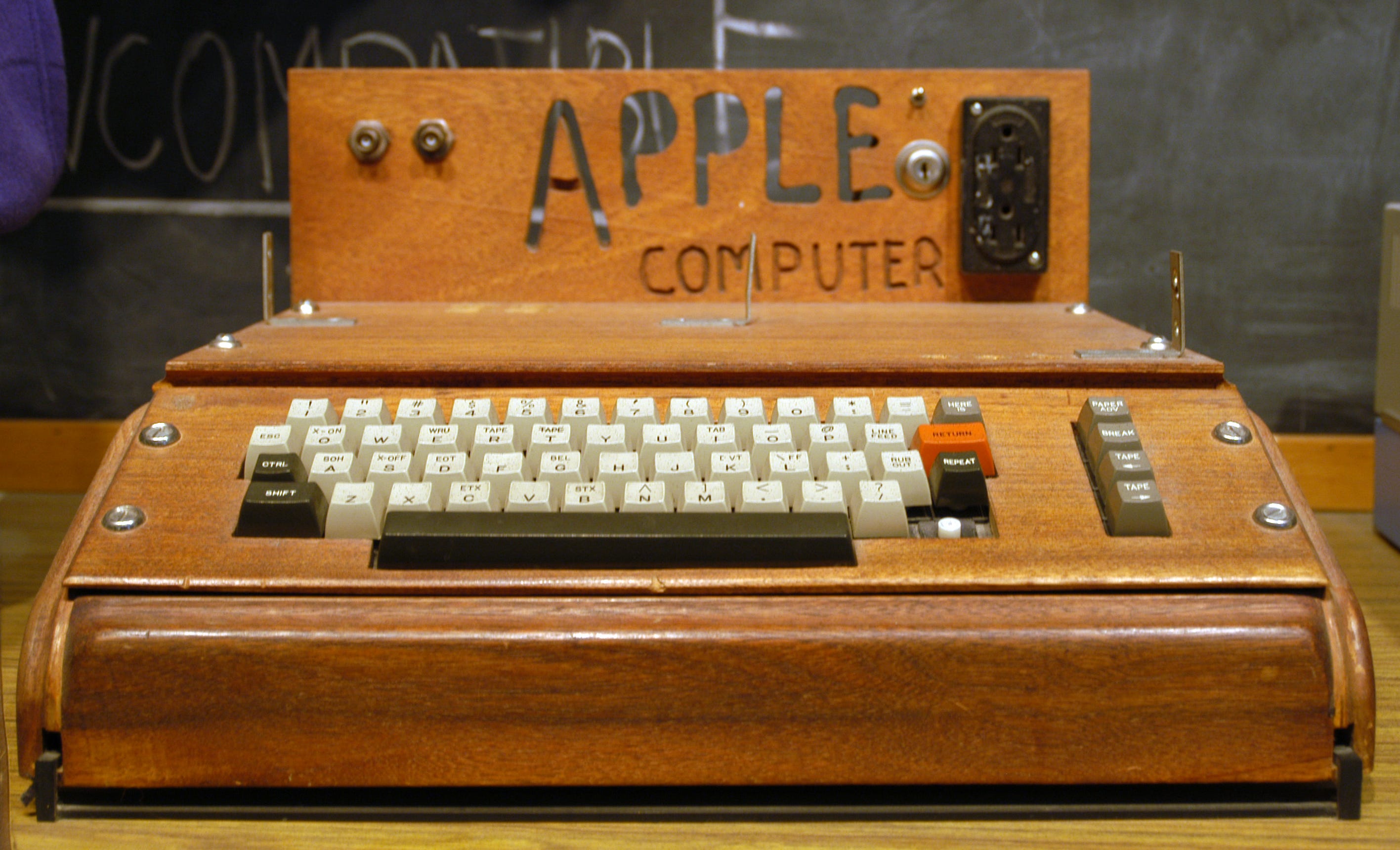
Steve Jobs was at the meetings. He saw the same schematics, but he read them differently. He saw a product the world would buy. Where Wozniak saw a machine other engineers could understand, Jobs saw a philosophy that could be named around it. The two of them founded Apple Computer together in 1976. Wozniak designed and built the machines. Jobs built the image and the company.
They had a serious disagreement on what the next machine should be. Wozniak wanted the Apple II open, with expansion slots so other engineers could build on what he had made. Jobs wanted it closed. He wanted the experience controlled by the company. Wozniak won the first round. He did not win many after that.
Jobs saw the paradigm shift and built the church around it.
The name needed followers. The followers needed someone to convert them. But Apple needed developers to create software for its platform. In 1983, it hired Guy Kawasaki as a Software Evangelist. The title was lifted from the church without irony. Nobody at the company thought twice. The product was the gospel. The customer was the convert. The skeptic was the infidel.
My father brought home an Apple IIe when I was eleven. I learned to work on a machine with expansion slots, a cover you could open to peek inside. The cool part was the computer games, as you only needed blank 5¼” diskettes and friends with the same machine. The games were cracked by someone who had figured out how, and we passed them around. The FBI never did find us, despite all their warnings. The culture trusted you to share what you had. Donne au suivant.
In hindsight, I was a user, not a convert. Later in the 1980s my parents bought a PC compatible. By then, the Mac was for designers and art students. PC was where the work was, and where university was, at least in my world. I spent the next decade and a half inside the Microsoft ecosystem, upgrading one version at a time, starting with Windows 3.11.
After years on PC, around 2008 I bought a Mac Pro tower. And when I bought my first smartphone I chose a Samsung Galaxy running Android over the iPhone. The iPhone was for consumers, fully packaged. I wanted a device for users, configurable from the inside. Samsung used to be that device. It is not anymore. Companies do not have principles. The business model wins.
What was once free became packaged, then sold back at a premium. Modern industry runs the same play. The cold plunge sells us back the swim, deconstructed, for a fee. Breathwork. Cold exposure. Sunlight exposure. Grounding. Vagus nerve stimulation. The slippers you forgot at home are the upsell.
Does exercise begin when we step on the treadmill? We park as close as possible to the gym entrance. The elders sound out of touch only because they remember the thing before the instrument replaced it. They used to walk to school by necessity. Now we drive to the gym to get some walking done, the instrumental substitute of a civilization that became privileged enough to remove walking from daily life.
Jesus of Nazareth preached a message of sharing, and Rome put him on a cross for it. Before we called them disruptors, empires called them threats. His followers kept the message alive. Eventually, a church was built around it, with Rome at its centre. Over time, the practice of the virtue became an instrument: a structure that could collect, interpret, administer, and preserve.
Will Durant wrote: “We repeatedly enlarge our instrumentalities without improving our purposes.” In other words, civilization accumulates comfort and capacity, while it does not accumulate wisdom.
That is the part worth remembering. Someone noticed something that worked. The instrument that came after was not useless. The trouble began when the instrument was allowed to stand in for the thing itself.
That is how the gospel of the instrument begins.