
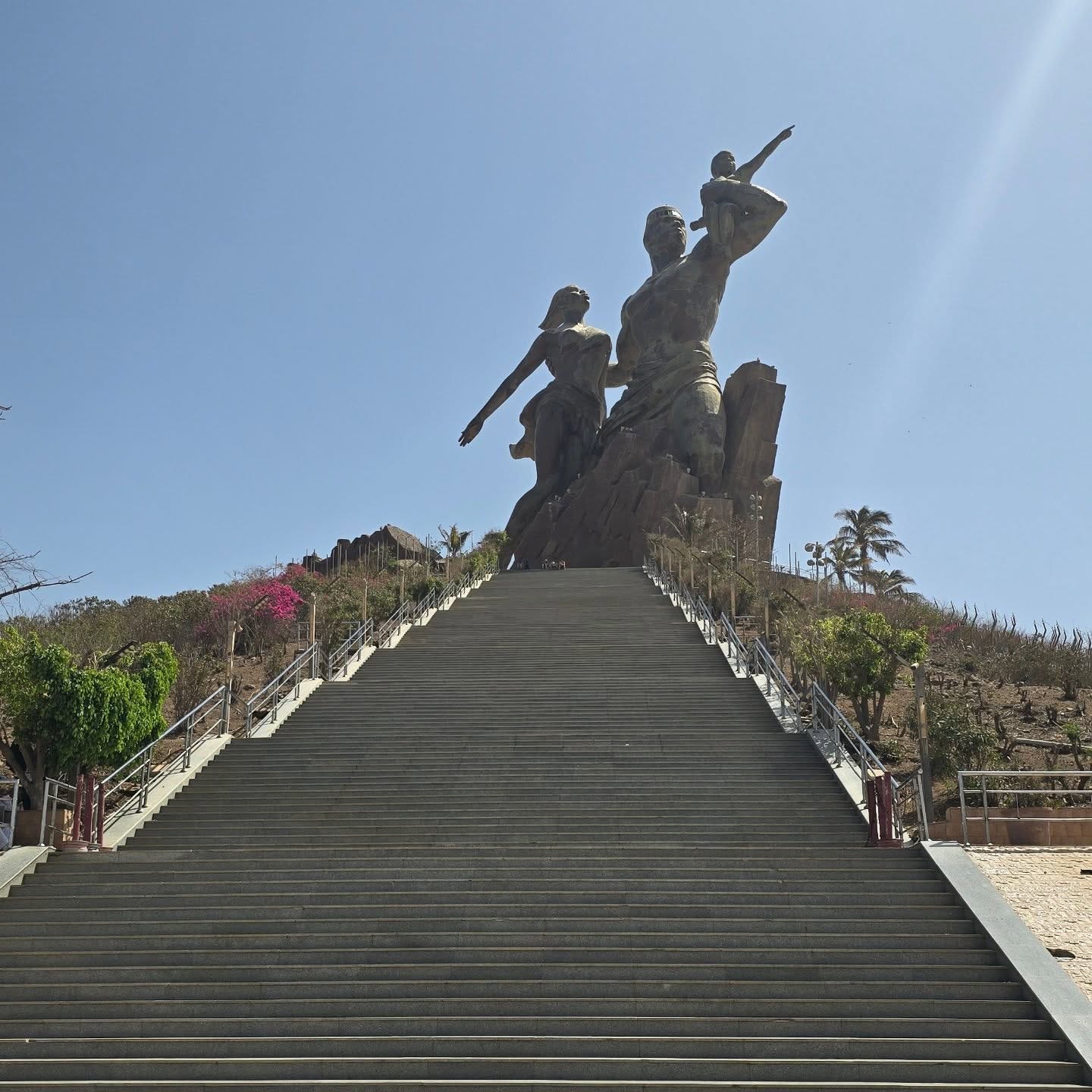
On Friday afternoon, the first of Ramadan, my colleague suggested we visit the African Renaissance Monument before the weekend. A must when you’re in town, she told me.
So we went.
I climbed the stairs. There were very few people. The sky was blue. The harmattan dust had followed us all week. At the top, fifty-two meters of bronze: a man, a woman, a child lifted toward the horizon. The man points northwest. Toward the Atlantic.
I was impressed. I took a photo and sent it to a friend.
His reply came back quickly. I’m paraphrasing: a monument to Africa’s emergence from ‘obscurantism’, built by North Korea.
I stopped walking.
That single sentence didn’t diminish what I was looking at. If anything, it made the monument more compelling. In that contradiction, something became clear. Liberation, funded by one of the most closed regimes on earth.
A monument is not a policy. It is not a memo, or a committee recommendation, or a five-year plan. It is judgment made permanent. Stone, bronze, concrete on a hill. You cannot walk it back. You cannot add a footnote. You cannot call a meeting to revisit the decision.
A head of state wanted to mark something. He had a vision: an Africa emerging from darkness, reaching toward its future. He also had a problem: the vision required a builder, and the builder required payment.
He hired Mansudae Overseas Projects, North Korea’s state-owned sculpture company. The same hands that build the statues of Kim Il-sung. He did not pay in cash. Public land was transferred. Later, he claimed a significant share of tourism revenues.
Those contradictions are now fifty-two meters tall. The decision will survive the man who made it real.
None of that was written on the plaque.
He paid a price. The protests were real. The criticism was sustained. The friction existed.
It did not disappear in a week. It did not dissolve in a news cycle.
A monument must survive the reaction to it. A social post does not have to. A monument is built to outlast its author. A social post is not meant to.
The impulse is not new. The arena is.
What has changed is not human behaviour. People have always sought advantage. What has changed is what friction costs the person who receives it.
A scandal once required sustained institutional pressure to become consequential. A protest had to persist. An opposition had to organize. Time was required.
Visibility now moves faster than consequence. What once took months to absorb takes hours to scroll past. The influencer monetizes the audience without apology. The executive claims credit for what the institution built. The friction arrives, generates engagement, and disappears.
The behaviour is not new. The cost of receiving friction is.
Senegal is predominantly Muslim. The imams objected to the figures. Thousands protested in the streets on the day of the unveiling. Their own judgment, paid in public. The opposition argued that a head of state cannot claim intellectual property over an idea conceived in public office. The monument had been paid for with public land, between thirty and forty hectares of it.
Most leaders, facing that bill, choose a committee instead. They commission a study. They wait for consensus. They build nothing.
I never asked anyone there what the monument means to them. An oversight.
I came down the stairs the same way I went up. Almost alone. The harmattan dust was still following us.
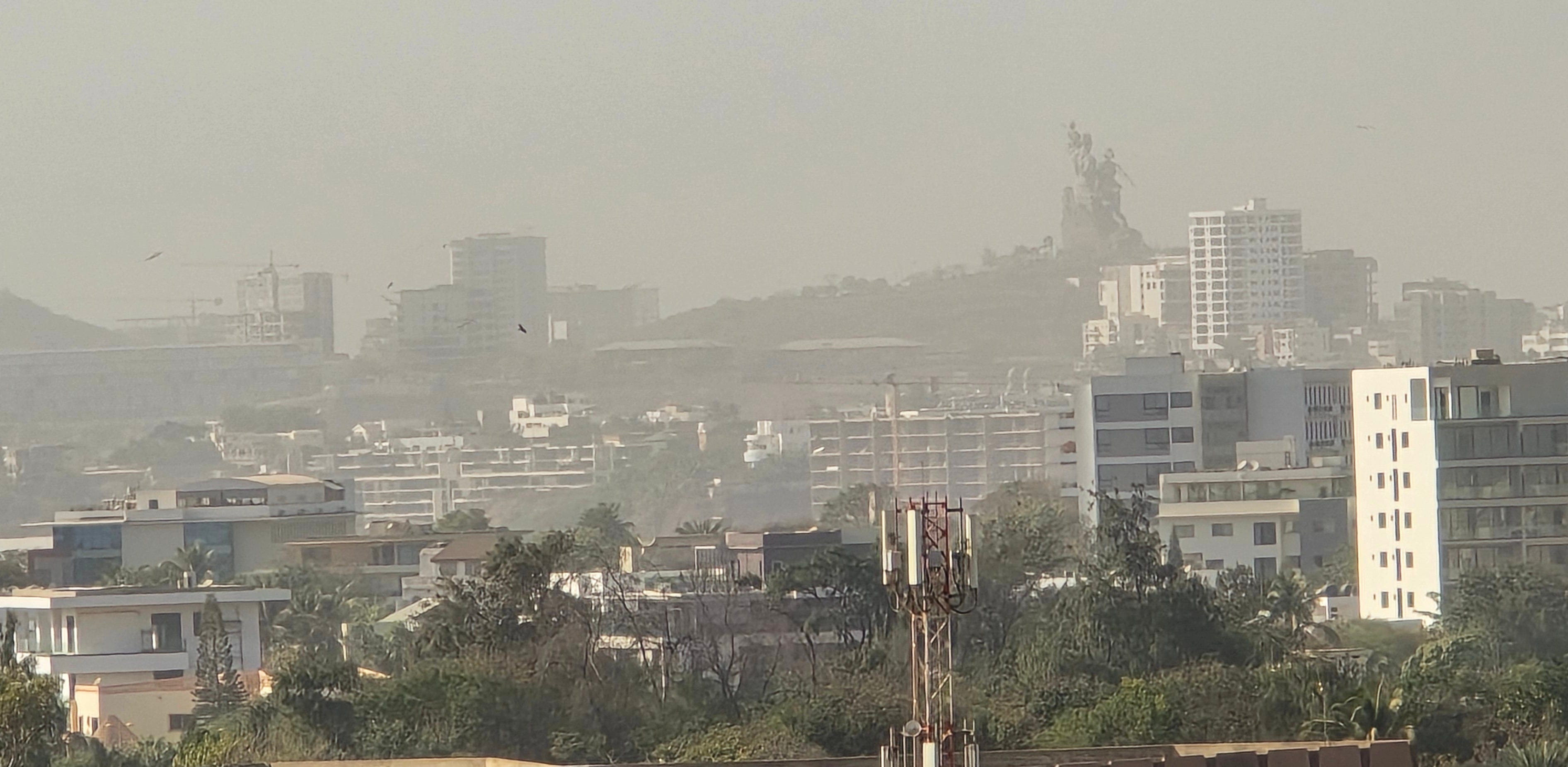
The harmattan dust can blur the horizon. It can sand the bronze over time. It cannot undo that a decision was made and paid for in public.