
I first came across Rory Sutherland in the summer of 2023, after hearing him on Rick Rubin’s Tetragrammaton. I picked up Alchemy soon after, then went back to it two or three times. Not because I wanted a marketing book, but because Sutherland seemed to understand something most business books miss: people do not make decisions only because the numbers tell them to.
The financial industry understands this too. It sells personas before it sells products.
One thing stayed with me. As a senior advertising executive at Ogilvy UK, Sutherland favoured hiring psychology students over business school types. The logic was clean: business students are trained to optimize what already exists, while psychology students are trained to understand why anyone wants it optimized in the first place.
Psychology graduates were also less demanding in terms of remuneration. The MBA would celebrate this as a cost-efficient operating model. Labour arbitrage opportunity. Optimized human capital allocation. The vocabulary of celebrating one’s own irrelevance.
Sutherland’s approach was not to start with the product. It was to understand the behaviours people recognize in themselves, then build the persona they would want to step into. That is not a master plan in the cinematic sense. Most marketing plans fail. The ones we remember are the ones that survived long enough to look inevitable. They tickled the right fancy, gathered the right crowd, and reached a tipping point.
The financial industry has its own frames: the prudent saver, the responsible diversifier, the believer in the future. These personas were fine-tuned for us to recognize, admire, then aspire to. The effect is to create a quiet psychological discomfort when we do not reach for one. This is marketing.
That matters because finance is rarely sold as greed. It is sold as responsibility. Development. Stability. Diversification. Access. A better future. The tragedy starts when those words become doors into arrangements that extract from citizens while telling them they are being taken care of.
For a real financial expert, diversifying a portfolio is serious work. There are research papers, mathematical models, considerations of sectors and businesses and the interconnections between them. The math is complicated and the interconnectivity is overwhelming. It feels like science, but diversification is often art justified with numbers. This is why it is often called investment philosophy, not investment science.
Warren Buffett is obviously a real person, but he is also a persona. The first is in Omaha studying companies. The second is in your inbox selling you a newsletter, a fund, a book, a course, a feeling about being smart with your money. Both exist. Only one is selling
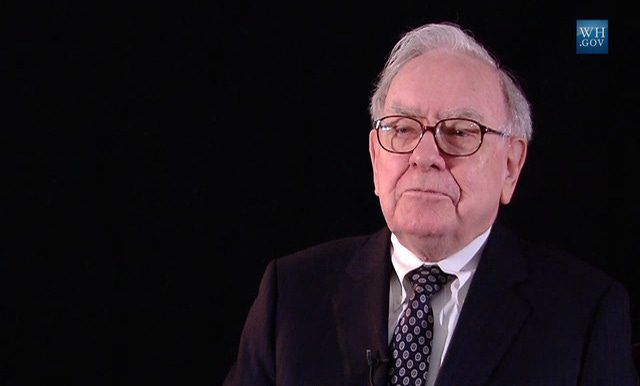
Beware, personas are not descriptions: they are doors presented to you. They sell you an idea, a vision, a finished version of yourself. The pitch ends when you open the door. By the time you ask, you are already inside.
This essay uses personas to deconstruct the illusion. A teacher in Buenos Aires in 1985. A founder in Dakar in 2026. An engineer in the Bay Area in the near future.
Buenos Aires, 1985
In 1985, a teacher in Buenos Aires gets her paycheck. It is larger than the previous one, but barely enough to catch up to prices that seem to move faster than her salary. She experienced what is known as hyperinflation: the daily price increase of groceries, the unavailability of durable goods, the diminishing purchasing power of her pension, and the growing stack of bills in her hand. To illustrate, monthly inflation had just hit thirty percent, quietly eating her purchasing power before she could even deposit her paycheck.
Argentina had been prosperous in the early twentieth century, with per capita income among the highest in the world. Then the economy stalled in the 1930s, coinciding with the Great Depression.
The country needed to reinvest in its decaying infrastructure and modernize productive capacity. The capital required for this had long been expensive and tightly rationed.
The petrodollar windfall that changed everything
A defining moment came in 1973, when the oil-producing countries, under the OPEC cartel, quadrupled prices. Western banks filled with U.S. dollars: the petrodollars. The same price hike severely slowed developed economies and weakened domestic credit demand.
This will sound counterintuitive, but the petrodollars came in as a windfall for Argentina: the World Bank was now able to provide credit to finance the capital investment it needed to reinvigorate the economy. For context, the World Bank is governed by wealthy creditor nations and is instrumental in routing capital from surplus countries into debtor economies.
Banks holding petrodollars had a strong appetite to lend, or else the dollars would just be unproductive assets on their books. Argentina and other Latin American countries now qualified as borrowers at scale. The loans flowed because borrowing was relatively cheap and more specifically available.
Alas, the touted economic turnaround never materialized. In 1979, the U.S. Federal Reserve raised interest rates in its own fight against inflation. For a moment, rates rose well above 20 percent. The dollar rose with them. Argentina’s loans were payable in dollars, but more importantly, they were floating-rate loans tied to U.S. interest rates, meaning the payments were variable. The result: the cost of servicing them tripled. That was not part of Argentina’s budget, nor forecast. The peso had to be devalued to keep up. In 1982, Argentina could no longer pay back what it owed to foreign banks and defaulted. Mexico had paved the way months before.
As a side note, it is usually bad financial practice to service a debt in a currency other than the one you earn in. Argentina cleanly demonstrated why.
Then came the International Monetary Fund (IMF) to manage the default on behalf of the lending banks. The IMF had been created in 1944 as part of the Bretton Woods system, to help countries that ran out of foreign currency to pay their international obligations.
By the 1980s, its mandate had changed. The IMF was the institution that arrived after a default to convert a country’s unpaid debt into enforceable terms. The terms were consistent across cases: devalue the currency to make the country’s exports cheaper, cut public spending to free money for repayment, privatize state assets to generate dollars for reimbursement. Citizens then lost subsidies on fuel and food and electricity. Wages were compressed.
The logic is familiar from the game Monopoly: when the cash runs out, the assets start moving to whoever still has money.

Argentina was forced to resolve the situation because the alternative was being cut off from dollar liquidity entirely. Resolving the debt issue with the IMF was necessary before the World Bank could resume the lending program. Many infrastructure projects were significantly advanced but not yet completed. There was no alternate path other than economic isolation.
The teacher’s currency lost value because the country had borrowed dollars to build infrastructure that came in late, came in incomplete, or came in at many times the promised cost. The lending contracts required the involvement of specific international firms (consulting, engineering, construction, etc.). Unfortunately, the dollars did not stay in the local economy to create the growth that was supposed to repay the loan. The full debt stayed on the country’s books.
The real tragedy: the pension the teacher had paid into for thirty years melted away, along with her buying power. She had not borrowed money from a foreign bank. She had not seen a penny of it, while she would spend the rest of her life paying for it. She had invested her time in her country, and the country failed her.
Dakar, 2026
Senegal was supposed to be the counterexample: stable, democratic, investable, the kind of country where the diaspora could return home and build.
What follows is a live example of the same trap.
In 2024, a young entrepreneur returns to Dakar to launch a digital payments company. She had grown up in Senegal, studied abroad, and built her career in finance in Europe. She came home because the country seemed to offer a proper business environment for what she wanted to build. International firms wanting a presence in Africa had chosen Dakar as the stable ground to service the continent. The technology sector was booming. Talent was strong, both homegrown and returning. The economy was prospering. Public infrastructure was developing.
I was in Dakar in February 2026. I heard on the local news that Senegal was “in talks” with the IMF. I knew what that meant

The hidden number
Something happened in 2026 that drastically changed her business environment.
The newly elected President Faye’s promised public finance audit discovered seven billion U.S. dollars in hidden debt. The country’s true debt was now 132 percent of GDP, not the 74 percent that had been reported by his predecessor.
The hidden debt had not been invented. It had simply been spread across project loans, state enterprises, and off-budget accounts that the official figures never consolidated. It was deemed a conscious decision by the previous administration to underestimate the debt stock.
No good deed goes unpunished: the IMF froze its 1.8 billion dollar lending program. Senegal’s sovereign bonds dropped sharply. The president dissolved the government. That was the political consequence, which worsened the economic outlook.
For our young entrepreneur, the consequence immediately surfaced in the next funding conversation. Her investors were now applying a new risk discount. The country itself had not changed overnight. The audit had only made the hidden number visible. Her work, her time, her investment, her ambition, all now devalued by the market.
Same trap as in Buenos Aires, four decades later. The people inside the persona are doing the same work, providing the same value, but the market “corrected” their worth.
The Bay Area, in the near future
Sometime in the near future, an engineer in the Bay Area checks his retirement balance. The number is smaller than expected.
He works at Microsoft. He has been there ten years. His base salary is high by any standard outside the few zip codes around him. Every three months, part of his pay comes in company stock. His financial advisor told him to diversify, sell the stock as soon as possible, with the objective of not having all his eggs in the same basket. The advisor recommended some of the major index funds, including the S&P 500. He followed the advice.
The illusion of diversification
Let’s look at the S&P 500, the most popular index fund, which owns shares in roughly five hundred of the largest public corporations listed in the U.S. This investment vehicle simulates direct ownership in Microsoft (approximately 5 percent of the index). It also holds Apple, Alphabet, Amazon, Meta, Nvidia, and Tesla. When SpaceX goes public, it will not be in the S&P 500. The committee has refused to fast-track it... for now.
But Nasdaq did. The Nasdaq-100 will absorb it within weeks. Retail allocation absorbs it on day one. The system has multiple paths.
The S&P committee can still change its mind. The gatekeeper held the line, but the machinery routed around it anyway.
His employer is in the index. His employer’s customers are in the index. His employer’s suppliers are in the index. He diversified away from Microsoft by buying the universe Microsoft was inside. Expecting to diversify, his exposure simply changed shape. The marketing sells diversification with the boast of owning a share of corporate America.
From a strict financial perspective, this is not proper diversification by any account. Especially for our engineer who works for Microsoft. His mortgage compounds the problem. He bought at the height of the market at the highest rate in decades. The mortgage payment is fixed every month. The income that covers it is not. The base salary alone falls short. The stock covers the difference. If the stock falls, the mortgage does not.
A serious financial review would recognize the mismatch: variable income, fixed debt. Many of the people selling financial products to retail customers will not be bothered by that. They are not paid to do the analysis. They are paid to distribute the products that the financial analysis would have flagged for our engineer. This is exacerbated by self-directed investing apps that allow people to cut the intermediary. You spend weeks shopping for a new fridge, then move far more money in minutes because the persona inspired you.
Meanwhile, June 2026
This next part contains financial arithmetic, but it matters. Stay with me.
At the time of this writing, SpaceX is expected to go public in June 2026 at a targeted valuation of 1.75 trillion U.S. dollars. The company lost 4.28 billion U.S. dollars in the previous quarter. To justify the valuation at a 20x earnings multiple, SpaceX would need to generate roughly 87 billion dollars in annual profit. Comparable to Apple, one of the most profitable companies in human history.
No serious financial analysis would defend this valuation. A company losing billions is not casually assumed to out-earn Apple. The number does not have to be correct for the market to accept it. It only has to be large enough for the machinery to absorb it.
If you’re still with me but lost, what I’m trying to say is this: the planned SpaceX stock market entrance is just plain nuts on valuation.
The distribution tells the same story. Up to thirty percent of the offering is being directed toward retail investors. The historical norm is closer to five or ten. Fidelity lowered the account threshold to two thousand dollars. Robinhood, Schwab, SoFi, E*Trade, and other self-directed investing apps are part of the machinery. This is not incidental access. It is distribution design.
The marketing seduction also reaches across asset classes. Bitcoin dropped from 74,000 to a recent low of 60,000 U.S. dollars at the time of writing. I read this as exit liquidity rotation: retail selling one future-facing asset to buy the next one. This is my call, and I could be wrong. But the same persona that bought Bitcoin as the future of money is now buying space as the future of everything. The asset changed. The persona did not.
The institutional buyer sees a valuation. The household sees a door: space rockets, Mars, innovation, the future, all packaged in a company you were never destined to own. That is the frame. The arithmetic did not disappear. It was packaged.

Here is the mechanism: the index buys the stock once the stock qualifies for the index. Retirement contributions buy the index because the index is the prudent default. Retail buyers buy the story because the story was packaged for them. The inflow supports the price. The price supports the weight. The weight attracts more inflow. Closed loops do not correct themselves. They amplify until something outside the loop breaks the pattern. In plain terms, it is a microphone pointed at an amp at full volume.
The engineer thought he was prudent. He thought he was diversifying. He thought the house was an asset. The advisor told him each of these things and he followed the advice. The advice was what the financial industry tells every person in his position to do.
The financial industry has marketing departments too. Trillions in assets do not market themselves. The advice was correct inside the system that produced it. The advice did not show him that following it placed him at the centre of the system rather than at the edge of it.
They sold you 500 companies. They delivered concentration in seven, including the one that already pays your salary.
The engineer bought the persona. A financial professional should recognize the mismatch: fixed obligations, variable income, and a mispriced asset packaged as diversification.
No one reads the fine print. The people who build the persona know that. They make sure you recognize yourself before you understand the investment you have accepted.
The Collateral
The teacher in Buenos Aires, the founder in Dakar, and the engineer in the Bay Area are in the same position. Different decade. Different country. Different class. Same ownership. Argentina owed the bank, and the bank owned Argentina through the repayment terms. Senegal owed the fund, and the fund froze the programme through its compliance terms. The engineer gave his money to the S&P, and the magnificent seven own him through the allocation terms.
The system takes from one side and pays the other. The teacher's labour produced dollar surplus that serviced debt held by people whose accounts she would never see. The engineer's monthly buying gives the early investor billionaire an exit: market liquidity to sell his shares. The entrepreneur's value was repriced by the same market that benefited from her work. All three are inside the system. Only one side is paying for it to continue.
This is not a story about bad bankers in 1985 or bad index committees in 2026. The people inside the system ran the methods the system rewarded. No one planned the trap. It emerged from each actor responding to the incentives in front of them. It is not a market call. The unwind may arrive next year. It may arrive in ten years. The argument does not depend on timing. The argument is about who owns whom inside an arrangement that never tells anyone who owns whom.
The teacher, the entrepreneur, and the engineer thought they were doing what they were supposed to do, in good faith, inside the personas they had stepped into. Their value did not diminish, and their work did not become less real, but the terms changed around them. The system claimed the collateral, and their equity evaporated.
The system does not lend to the household so much as it borrows from it, calling caution participation until losses arrive and the collateral is taken away as if it were simply the normal settlement of accounts.
What stayed with me after listening to Rick Rubin and Rory Sutherland is that human decisions often begin before the numbers. The frame comes first. The numbers arrive later to explain why the choice felt reasonable. In finance, that gap becomes dangerous: the frame sells responsibility, while the contract organizes absorption.
That is why the persona matters. The system sells us the persona before it sells us the investment. We step into it because it feels safe and responsible: the prudent saver, the responsible diversifier, the believer in the future. The investment itself is not part of the pitch. By the time it becomes visible, the persona has already done its work.
We thought we were choosing a financial strategy. We were accepting a place in the marketing plan.
We are the collateral, and we are on auto-pay.
The opt-out is buried in the fine print.