
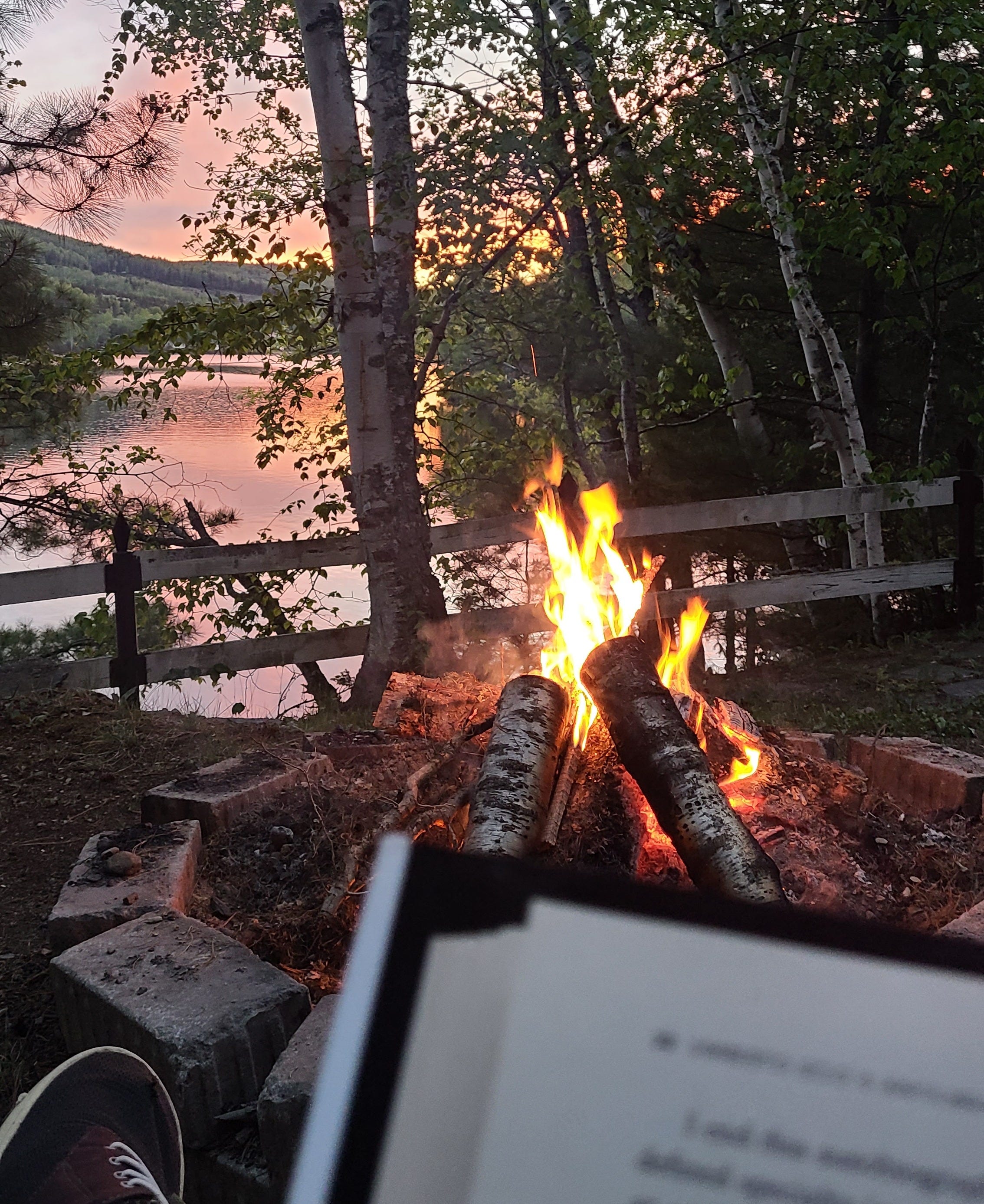
A flame is energy passing through matter. It feeds on wood and air. As long as it burns, it is the same fire. It never stops consuming.
We are the same person, though almost everything that composes us is replaced, borrowed, repaired, burned, and spent.
We think living is matter. Carbon, iron, oxygen, and most of all hydrogen. But the matter is taken and spent. What makes us alive is the flow of energy through it, burned against everything trying to level it out. That flow is what feels, what changes, and what interprets its own existence.
The origin of complex life was a singular event.
Something happened, once, and remained: one cell came to live inside another. This symbiosis was the spark, and all complex life is downstream of it. From that moment, you share an origin with the ant climbing your leg, and with the lettuce you just ate. From then on, there was an energy budget for growth, for joining, for becoming something in particular.
Once energy could be budgeted, life could afford distance from the immediate. It could do more than react. It could hold what was not there.
From here, it looks positive. It has to. I am looking at it from inside the winning branch. That is survivorship bias. I stand in the one line that lived, blind to the ones that did not. I claim it. I read the luck as mine, and then I read my survival as direction.
And underneath it all, we keep asking what and why. Nature does not ask. I exist because it happened, and I can only judge it with the senses, fears, appetites and meanings that the same event made possible.
Others inherit the same event and curse it. Same bet. Priced from an end I cannot reach.
For billions of years, life ran on survive and reproduce. Then the system became complex enough to experience the machinery as if it were aimed at something. Purpose may be what survival feels like once the organism is complex enough to narrate its own hunger.
Awareness came from reading the close environment. An organism cannot survive a limit it cannot sense, so perception came first. The organism decodes what is near because staying alive required it, and awareness is that decoding turned inward far enough to include the one doing the decoding.
The limit never left. We perceive from inside a bounded instrument, tuned to the scale a body lives at. But we point it now at the infinitesimal and the infinite, neither of which the instrument was built to read. Early on we perceived little and knew we were bounded, because the barrier was right there, a cliff, the cold, a predator. Today we perceive far more and assume far more, and the assuming outruns the perceiving. We lost the cliff. So we assume across the gap the cliff used to guard.
What imagination generates is not bound by physics. But physics is what allows us to imagine. The picture is free. The fire that draws it is not.
Maybe I do not feel because cause and effect made room for feeling. Maybe feeling is cause and effect from the inside, warm for a moment.
The fire will go out. Some spend the whole of it refusing that, pushing their warmth into other people so something of them will remain. That is not freedom. It is a life owned by its own ending. The one who can say the fire goes out, and mean it, gets the warmth back. For as long as it burns.
The passages on the origin of complex life draw on the work of Nick Lane, particularly Power, Sex, Suicide.